Production Technology
Keda Suremaker, Maanshan City, Anhui Province, China
From manual handling to automated reinforcement cage assembly in AAC panel production
Loading...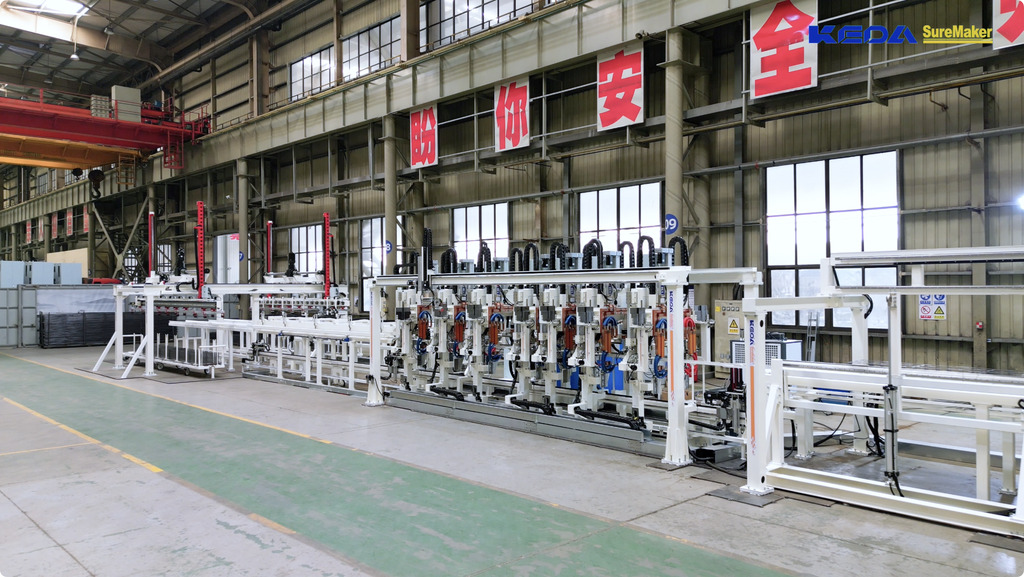
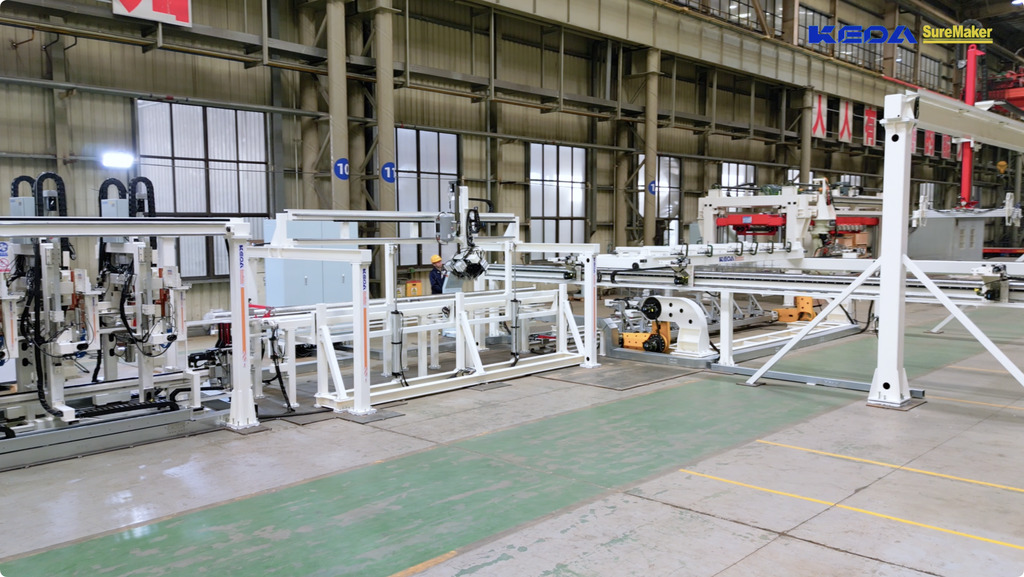
K-Arfas, the automatic reinforcement cage assembly system developed by Keda Suremaker, follows the process route of “mesh panel – reinforcement cage – assembly”. It integrates mesh welding, buffering and conveying, cage forming, cage welding, long bar cutting, cage turning, saddle frame positioning and automatic assembly. The system is designed to reduce manual involvement in reinforcement cage preparation, improve process continuity and provide a stable reinforcement basis for high-quality AAC panel production.
A key preparatory process in AAC panel production
As AAC panels are increasingly used in residential, public and industrial buildings, panel production lines require higher levels of automation, flexibility and quality stability. Compared with AAC blocks, AAC panels normally require reinforcement cages, whose positioning accuracy, connection stability and dimensional consistency all affect final panel performance.
In an AAC panel production line, processes such as batching, pouring, cutting, autoclaving and packaging are often already highly automatized. By contrast, reinforcement cage preparation still involves considerable manual work in many plants, including mesh handling, turning, positioning, welding, transfer and assembly.
As panel specifications become more diverse and production capacity increases, a manually dependent reinforcement preparation section can affect overall line rhythm and product consistency. Therefore, automation of reinforcement cage assembly is becoming an important direction for AAC panel production line upgrading.
Technical route: From mesh panel preparation to automatic cage assembly
The technical route of K-Arfas can be summarized as: mesh panel preparation → mesh buffering and conveying → mesh turning and cage forming → cage welding → long bar cutting → cage transfer and turning → saddle frame positioning → automatic cage assembly. This process integrates operations that were previously distributed across several stations and often connected by manual work into a continuous workflow, allowing reinforcement cage preparation to better match the rhythm of the AAC panel production line.
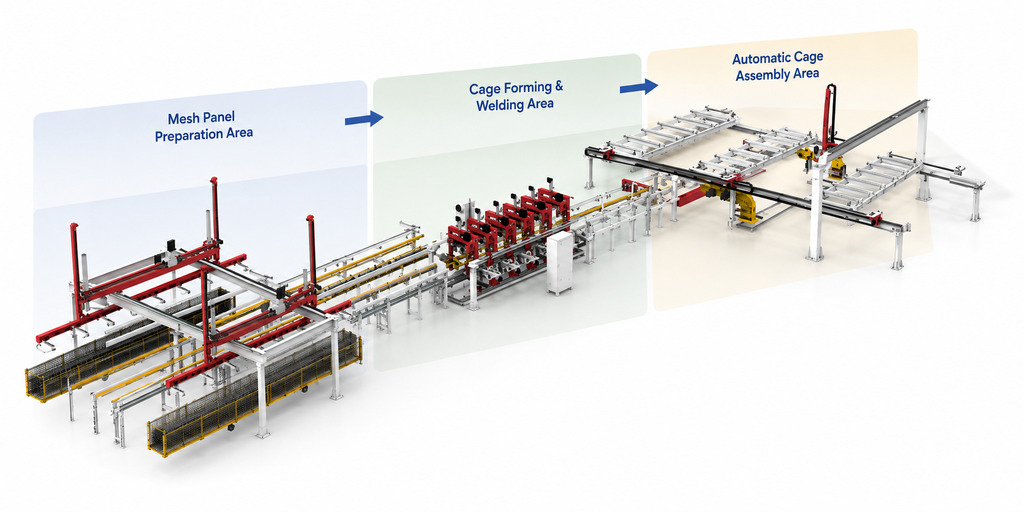
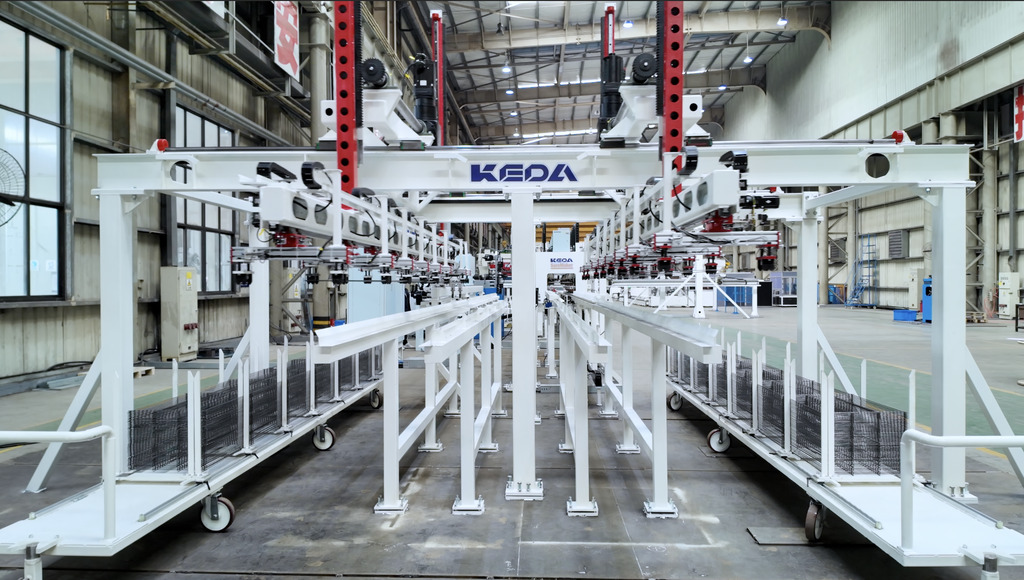
At the front end, the mesh welding machine produces reinforcement mesh panels. According to the production arrangement, mesh panels can be buffered by mesh carts or transferred to the next station by cranes and conveyors. The purpose of this section is not only to produce mesh panels, but also to provide a stable feeding rhythm for continuous cage forming and assembly.
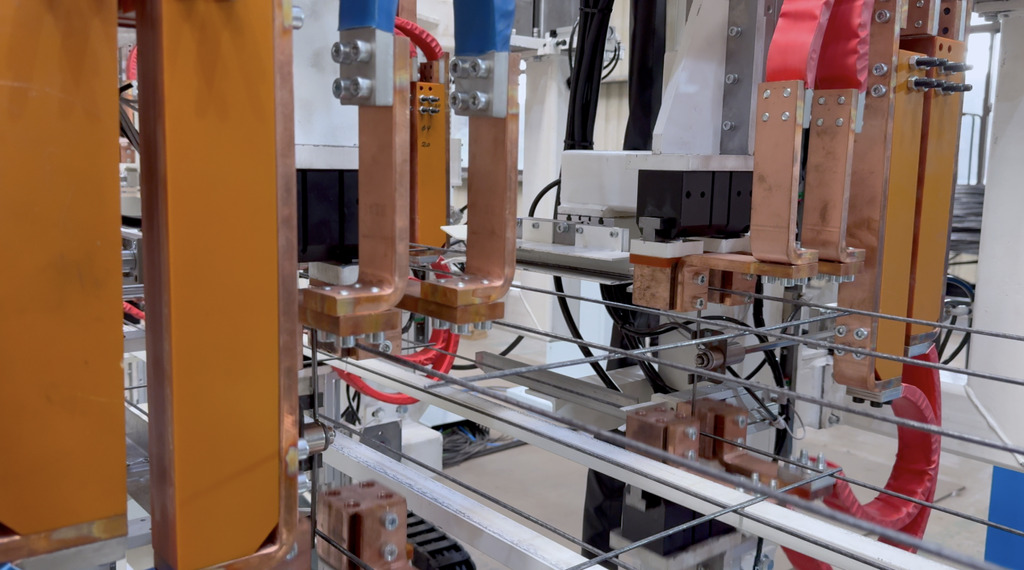
The mesh turning and lifting device then turns and combines two mesh panels to form the basic cage structure. At the cage welding station, the upper and lower mesh panels are welded into a stable reinforcement cage. According to different panel specifications and reinforcement layouts, horizontal or vertical cutting devices can automatically cut long bars so that cage dimensions and bar extensions meet the requirements of the following assembly process.
At the rear end, the reinforcement cage enters the automatic assembly station through lifting, conveying and turning mechanisms. At the same time, the saddle frame conveyor and adjustment device complete saddle frame positioning, while the pin-changing system carries out pin changeover or position adjustment according to specification requirements. Finally, the assembly unit combines the reinforcement cage with the saddle frame system, forming a reinforcement cage assembly unit ready for the subsequent pouring process.
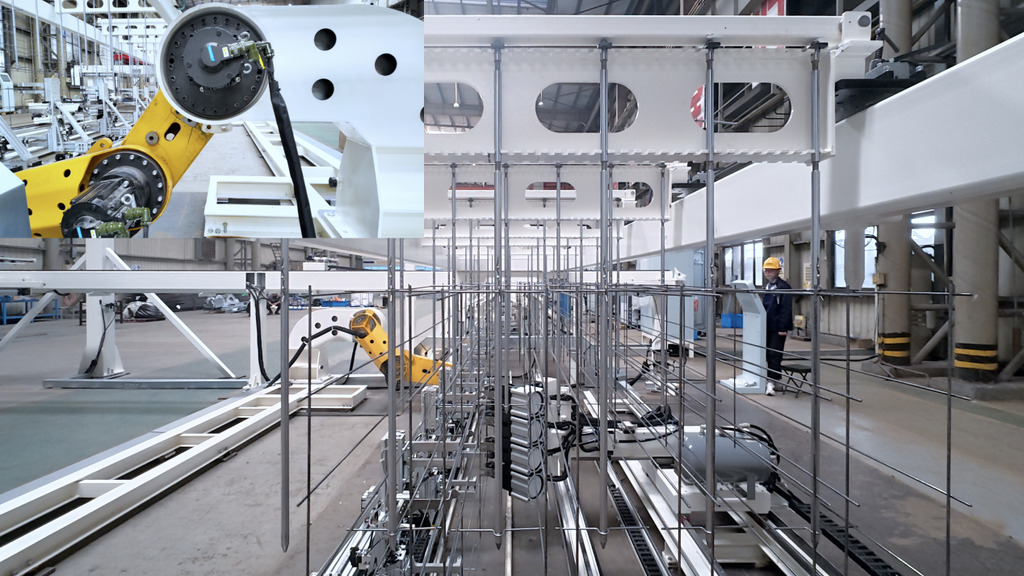
According to the system design, the solution can be applied to specifications from 50 to 300 mm. For 200 mm panels, the cycle time can reach no more than 2.5 minutes per mould. This means that the system does not simply automate individual actions; more importantly, it organizes reinforcement cage preparation into an automated process section that supports continuous operation, cycle-time matching and specification changeover.
Labour reduction and stable production rhythm
In traditional production organization, handling, turning, positioning and assembling reinforcement mesh panels and cages often require several operators to work together. These operations are repetitive, labour-intensive and easily affected by operator skill and shift conditions.
The automatic assembly system reduces direct operator involvement in high-frequency and heavy-duty processes through mechanical conveying, automatic turning, welding, cutting and assembly. Operators can gradually shift from handling and assembly to equipment inspection, production monitoring and quality management.
For high-capacity AAC panel production lines, labour reduction is not only about lowering staffing pressure on site. More importantly, it reduces the dependence of production rhythm on individual operators. A systematic and continuous equipment layout helps reduce waiting, rework and rhythm fluctuation, allowing reinforcement cage preparation to better match complete-line operation.
Improving cage consistency and production flexibility
AAC panels have high requirements for reinforcement cage position, spacing and connection stability. Through stable positioning, welding and assembly, automated equipment can reduce quality fluctuation caused by manual variation and improve the consistency of cage dimensions and assembly positions.
For long panels, high-strength panels or panels with multiple specifications, stable cage quality is particularly important. A stable reinforcement cage structure not only affects panel performance, but also provides a reliable basis for subsequent pouring, pre-curing, cutting and autoclaving.
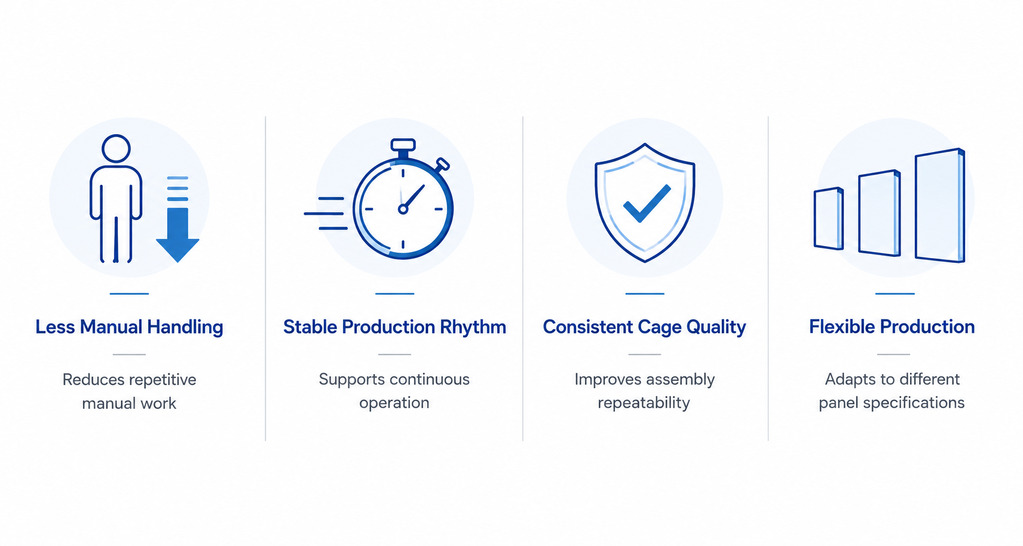
At the same time, AAC panel producers often need to handle products with different thicknesses, lengths and reinforcement layouts. K-Arfas can be configured in modules according to product requirements and can support different mesh and cage assembly forms. Saddle frame adjustment, pin-changing and positioning modules help the system adapt to multi-specification production and reduce time loss caused by frequent manual adjustment.
This flexibility makes the system suitable for both new AAC panel production lines and the upgrading of existing lines according to site conditions. Producers can choose full integration or phased upgrading based on capacity requirements, product structure and investment plans.
Toward high-quality AAC panel manufacturing
The development of the AAC industry is moving from capacity expansion alone toward a more comprehensive improvement in efficiency, quality, energy performance and automation. For panel production, reinforcement cage assembly is a preparatory process, but it directly affects complete-line efficiency and the quality foundation of final products.
The value of K-Arfas is not in replacing one single manual action. It lies in connecting mesh preparation, cage forming, welding, cutting, transfer and assembly into a continuous system. By reducing manual involvement, stabilizing production rhythm, improving cage consistency and enhancing adaptability to multiple specifications, the system provides AAC panel producers with a practical path toward high-quality manufacturing.
As AAC panels continue to gain wider application in the global construction market, production lines will require higher levels of automation, continuity and flexible manufacturing. Automated reinforcement cage assembly systems will become one of the important technical directions for AAC panel plants seeking long-term competitiveness.
For AAC panel manufacturers, upgrading the reinforcement cage assembly section is no longer only a local equipment improvement. It is an important part of raising the automation level of the complete production line. By integrating mesh welding, buffering and conveying, forming, cage welding, cutting, positioning and assembly into a continuous system, K-Arfas helps producers reduce labour dependence, improve production rhythm stability and provide a more reliable reinforcement basis for high-quality AAC panel production.
Against the background of global construction industrialization and the rapid development of green building materials, AAC panel production also requires more efficient, stable and intelligent equipment systems. Automated reinforcement cage assembly is an important step in moving AAC panel production from traditional manufacturing toward high-quality manufacturing.