Projects
From protective shell to multifunctional space
Autoclaved aerated concrete makes flat roofs sustainable
Loading...Today, planners and architects are transforming modern flat roofs of universities, office complexes and airports into valuable, multifunctional spaces. Green roofs provide habitats for insects and birds, while retention roofs support active stormwater management and flood protection. At the same time, green roofs help mitigate urban heat islands: while conventional roofing membranes can reach temperatures of up to 80 °C in midsummer, green roofs remain at around 25 to 30 °C thanks to shading and continuous evaporative cooling, thereby reducing heat build-up in the surrounding air and improving the local microclimate.
Roof surfaces are also being used as roof terraces, gardens, vehicle-accessible parking decks and even sports facilities. In addition, building services, air-conditioning systems and photovoltaic installations are increasingly becoming integral components of modern roof concepts.
This intensive use requires solid, durable materials. All of the aforementioned applications have one thing in common: they impose significant structural and building physics loads on the roof structure. The insulation must be able to withstand these permanent loads and meet strict fire safety requirements. With Multipor flat roof insulation, planners can rest assured that they are making the right choice. Multipor is high-compressive-strength, non-compressible, and non-combustible, so it masters the challenges that conventional materials often fail to meet.
Flat roofs as multifunctional usable spaces
"Flat roofs are evolving from mere protective shells into multifunctional, usable spaces," explains Eric Vogel, a mineral insulation systems expert at Xella Germany. "However, conventional materials are often simply not designed to handle the resulting high structural loads."
This is exactly where Multipor mineral insulation boards come in. The system was developed specifically for the most demanding conditions. It is non-combustible, pressure-resistant, and retains its shape permanently, even under enormous loads. This reliability has been officially confirmed. Following extensive testing, the German Institute for Building Technology (DIBt) certified Multipor as having 100 percent dimensional stability and a service life of at least 50 years.
This is particularly important for modern retention roofs. In densely populated cities with heavily sealed surfaces, these roofs store precipitation, release water gradually, cool the surrounding area, and provide habitats for plants, insects, and birds. Prominent examples of this include the Kö-Bogen in Düsseldorf, Germany, and the National Library in Luxembourg.
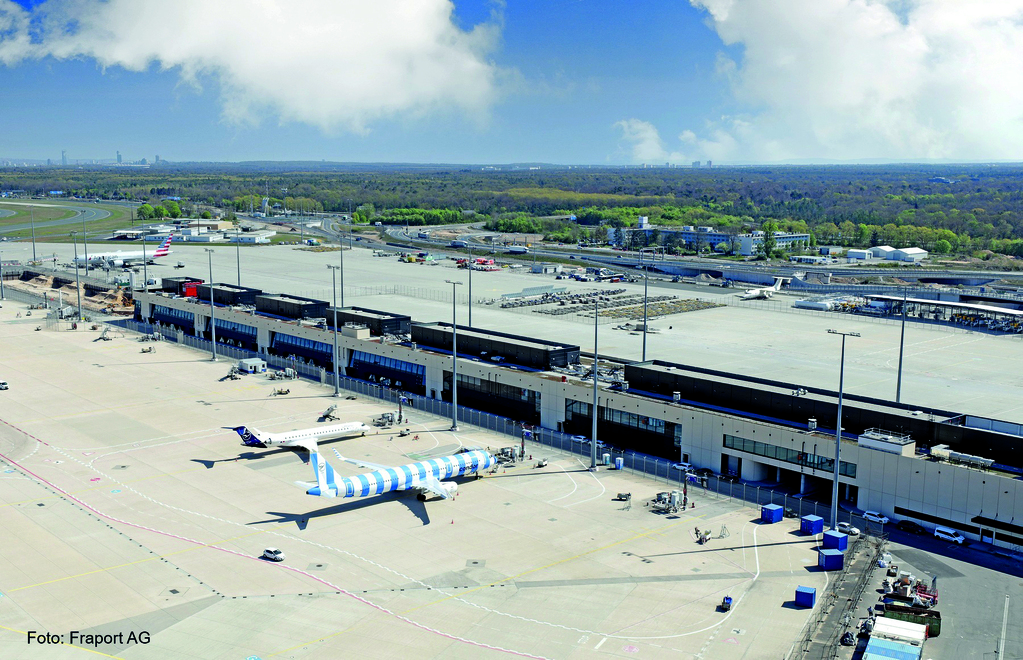
Terminal 3 at Frankfurt am Main Airport showcases Multipor's load-bearing capacity: the building complex, designed by architect Christoph Mäckler, has flat roofs that are hundreds of meters long and support a variety of loads, including extensive HVAC systems.
How a modern green roof made of Multipor is created
The basic structure of a flat roof always follows the same principle.
· First, a vapor barrier is installed on the supporting structure to prevent moisture in the indoor air from penetrating.
· Next, the insulation layer is applied,
· This is followed by the waterproofing layer.
· Then, green roofs, rooftop terraces, or technical systems are installed.
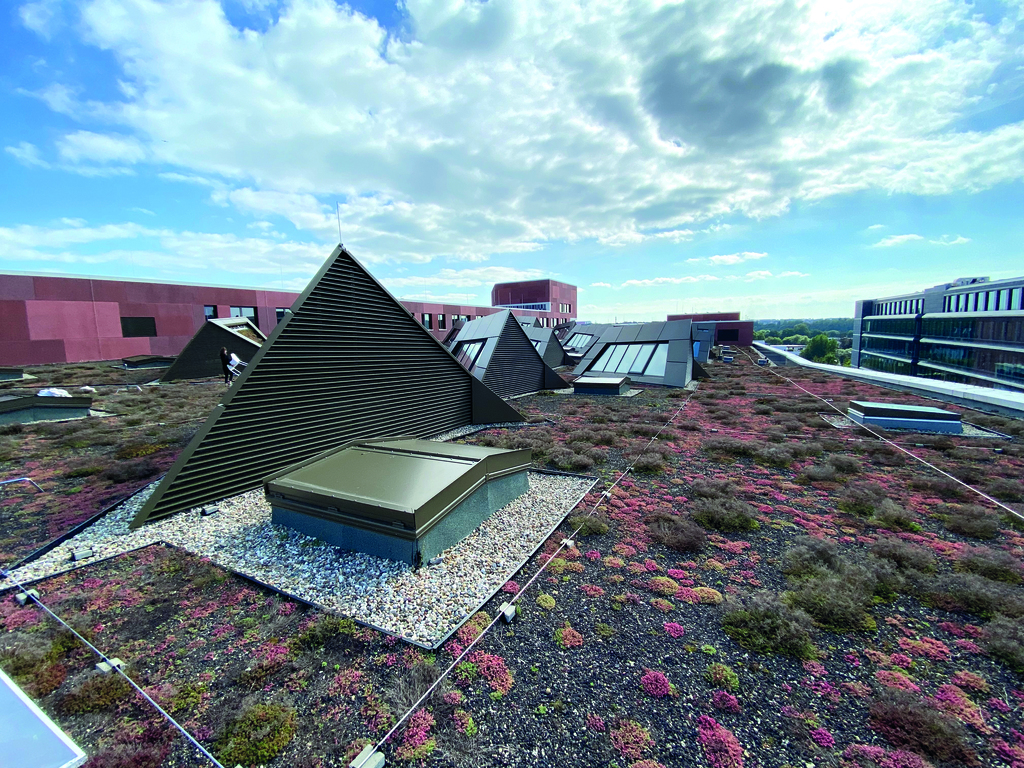
At the Jena campus in Germany, this principle was implemented across approximately 2,500 square meters of roof area. The university building's roof is covered with an extensive green space and generates sustainable electricity with the help of a photovoltaic system.
Despite its multilayered structure, the roof assembly remains compact with an average thickness of 24 to 28 centimeters, including the base insulation.
Master roofer Mirko Rösch was responsible for installing the flat roof in Jena. He and his team are familiar with the material from hands-on experience and enjoy working with it. "Thanks to their unique mineral structure, the lightweight, easy-to-handle Multipor panels are simple and safe to install."
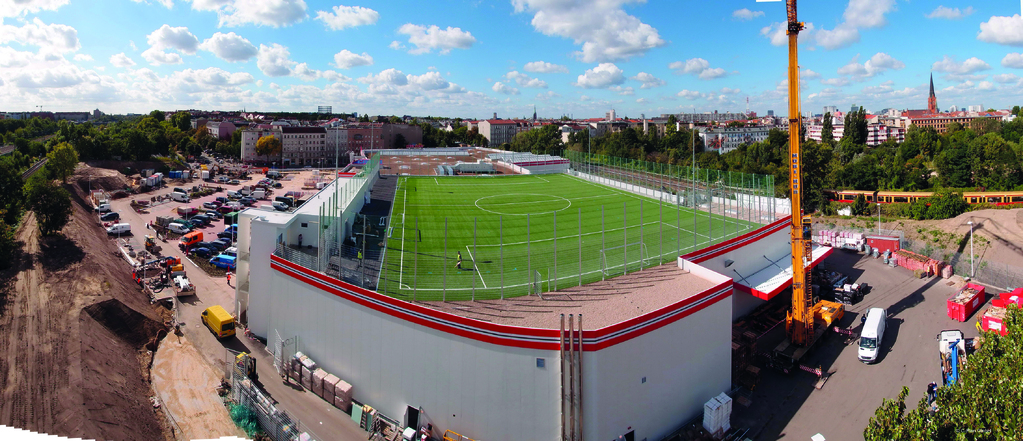
Playing soccer on the roof
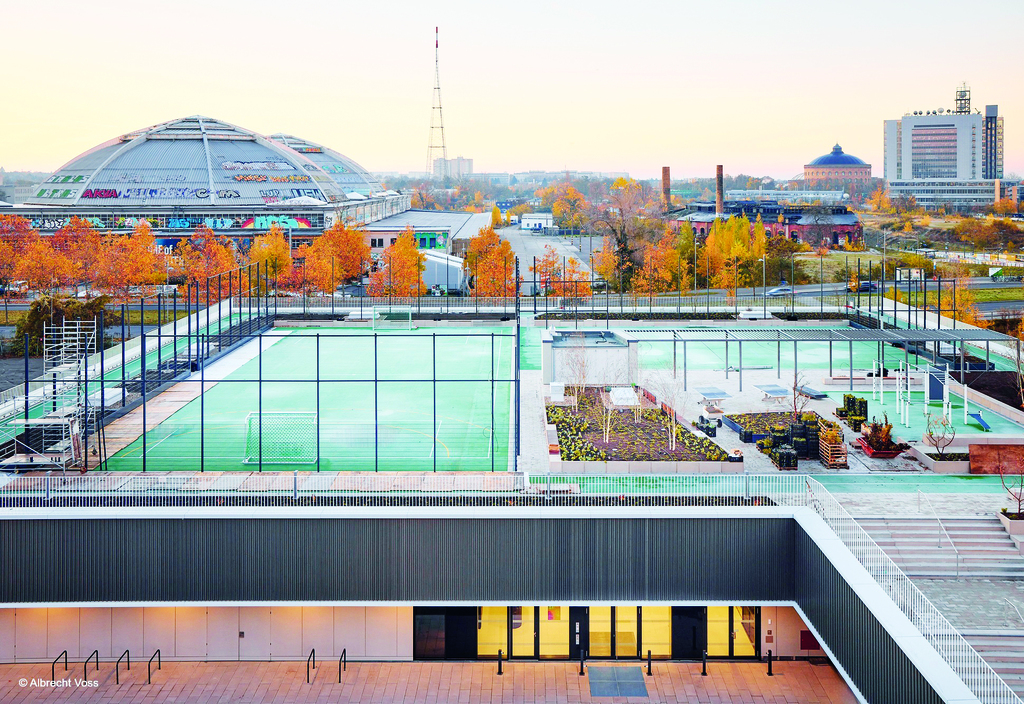
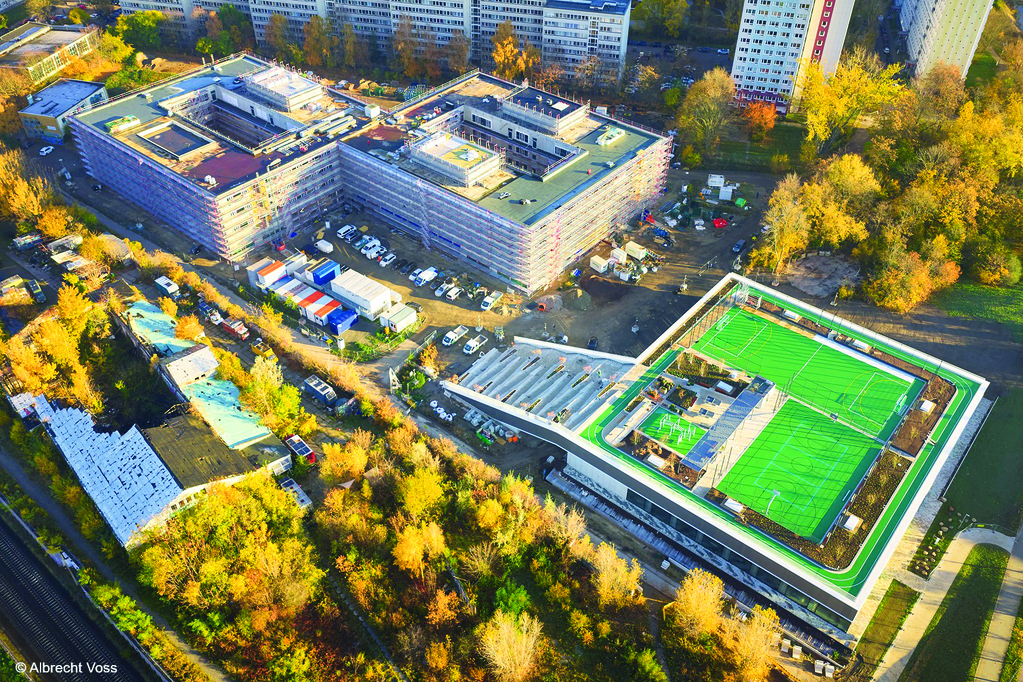
In Berlin, people have been playing soccer on the roof of a Hellweg home improvement store for over ten years. Young soccer players train on approximately 4,000 square meters of artificial turf, more than ten meters above the ground. The roof's high compressive strength makes this unusual use possible.
Buildings with glass facades use Multipor boards for cleaning systems, and many hotels are building entire wellness areas on their roofs. In densely populated cities, flat roofs provide additional open spaces for physical activity where ground-level space is often lacking.
This trend is far from over. "Climate change and growing cities will increase the pressure on every available surface – including upward," explains Eric Vogel. Consequently, the demands placed on flat roofs are likely to increase in the future.
With Multipor mineral insulation boards, planners have the right foundation today: it is durable, non-combustible, and dimensionally stable for decades.