Production Technology
Wehrhahn GmbH, Delmenhorst, Germany
Soceram Romania expands AAC production with a second plant
Loading...Cutting and separation concepts
Tilt cake cutting
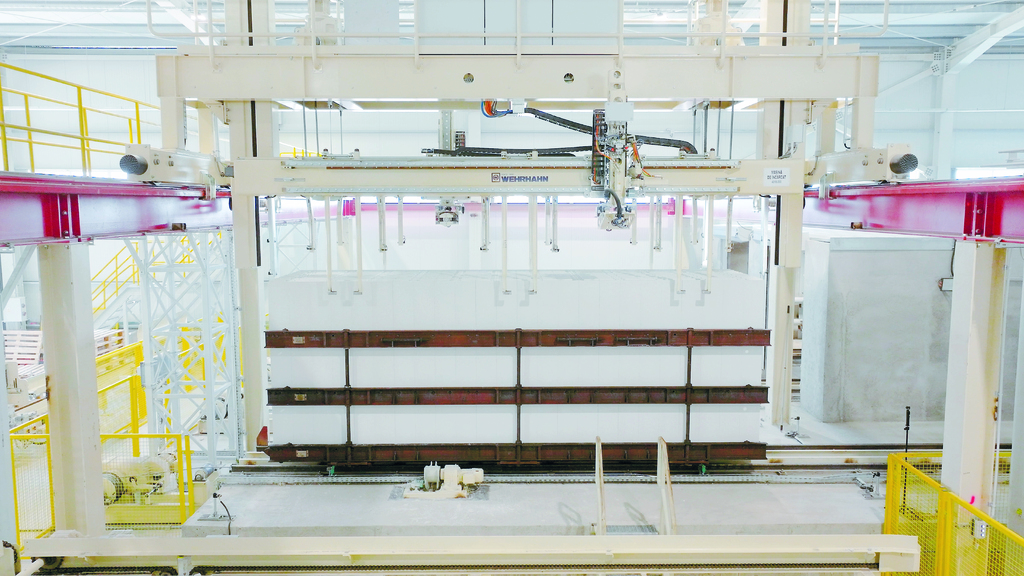
Both the Plus and Smart types use Wehrhahn’s tilt cake cutting technology. After pre-curing, the mould is tilted through 90 degrees and the cake is placed on a cutting pallet. The pallet then supports the cake as it passes upright through the cutting line, limiting the stress caused by mechanical handling. [1]
Five sides of the upright cake are accessible for cutting and profiling. The cutting line establishes the product dimensions in three stages.
First, the side trimmer establishes the block length or panel width and forms the required profiles. Tongue and groove and, where specified, hand holds are produced before autoclaving.
The thickness cutter then divides the cake into the specified block or panel thicknesses. Short cutting wires help to maintain dimensional accuracy. Optionally, automatic cleaning of the wires and knives removes adhering material that could deflect the wires or affect the cut surfaces.
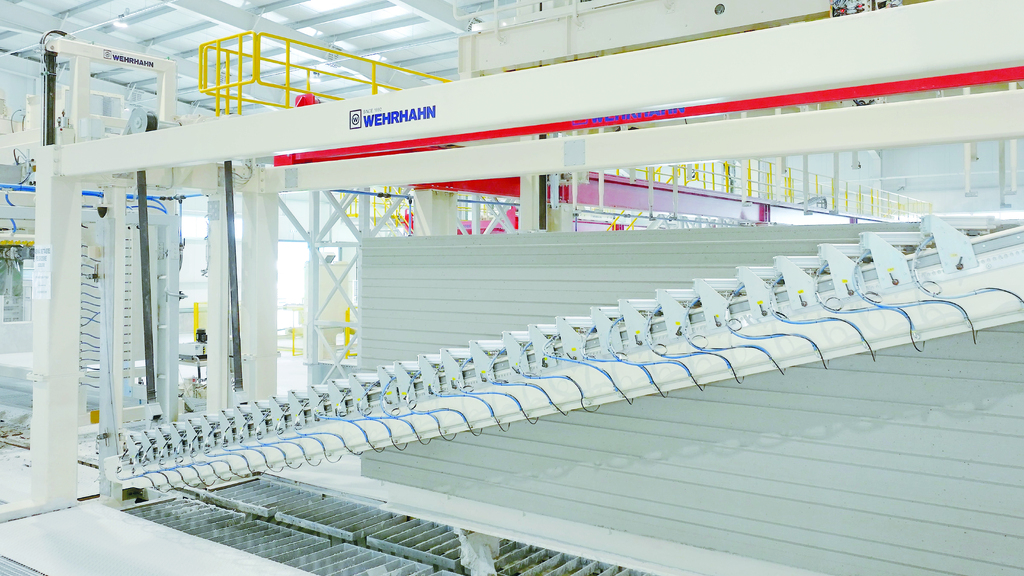
The new Smart thickness cutter
The latest Smart generation incorporates a redesigned thickness cutter offering particular benefits for 75 mm and 50 mm products. Producing these thicknesses requires more cutting wires, making the distribution of cutting resistance within the green cake especially important.
The wires are staggered along the direction of cake movement. Several wires can cut at different positions along the cake, but no two wires are positioned directly above each other in the same vertical cross-section. This spreads the cutting resistance along the machine’s entire length.
The arrangement reduces local tensile and shear loading, helping to limit deformation, cracking and displacement of thin layers while maintaining thickness accuracy. Careful control of these loads is particularly important for cakes with low green strength.
The cross cutter then determines the block height or panel length. Two oscillating cutting frames and constant wire tension ensure dimensional accuracy, including the height tolerances required for thin-bed mortar construction. [1]
Both plants therefore follow the same basic cutting sequence. The key difference between the Plus and Smart process routes lies in the handling and separation of the cake after cutting.
Plus vertical cake autoclaving and white separating
At Cordun, the cake remains upright for autoclaving. The joints made by the thickness cutter lie horizontally, with the product layers resting on top of each other.
Wehrhahn uses a 6.0 × 1.2 m mould format for Plus plants. The 1.2 m dimension limits both the height of the upright cake and the load on its horizontal joints, helping to reduce the tendency to stick during autoclaving. The lower joints carry the greatest load from the layers above.
As the products develop their final strength during autoclaving, adjoining cut surfaces can bond. The extent of this bonding depends on the recipe, water-to-solids ratio, product density, cake condition and autoclaving cycle. The weight of the layers and the downward migration of water can promote bonding at the interfaces.
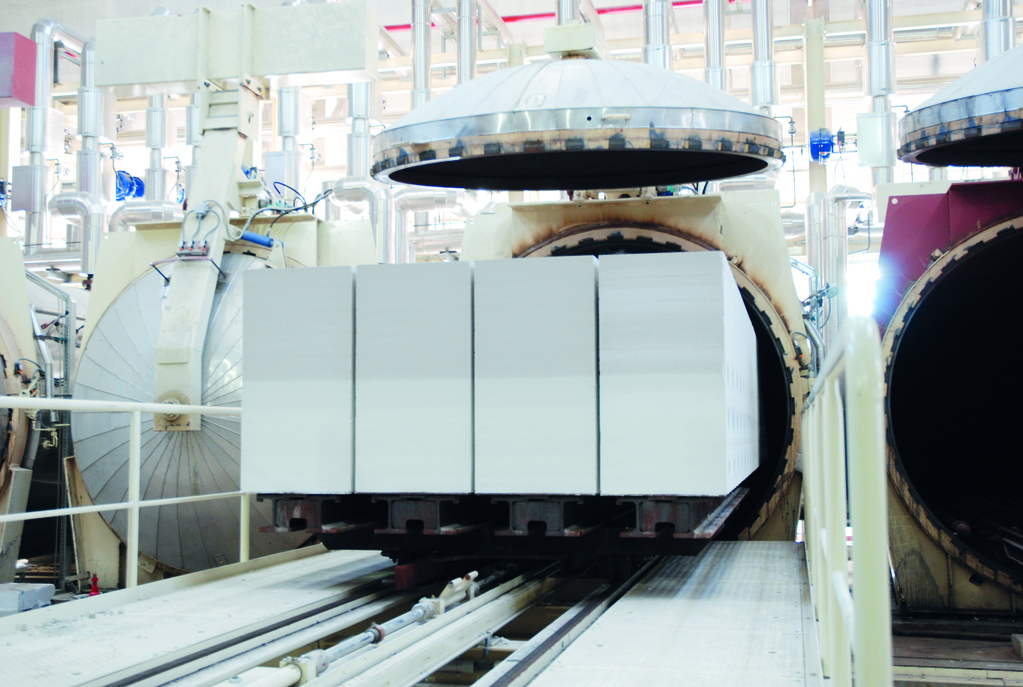
The Wehrhahn bed remover
A distinctive feature of the Plus plant is the bed remover, which was developed and patented by Wehrhahn. It removes the bottom layer, approximately 50 mm thick, after cutting and before autoclaving.
If this layer were to be autoclaved with the cake, it would become hardened waste requiring separate removal and handling. The Wehrhahn bed remover eliminates this common disadvantage.
The bed remover allows the fresh material to be recycled through the return slurry system before any energy is expended to autoclave it. This is central to Wehrhahn’s zero system waste concept for Plus; the term refers to process-related cut-offs, rather than claiming that production can never generate rejects.
Removal also eliminates the interface between the bottom layer and the finished product, which can be particularly susceptible to sticking. It therefore avoids both a hardened waste layer and the need to separate the interface after autoclaving.
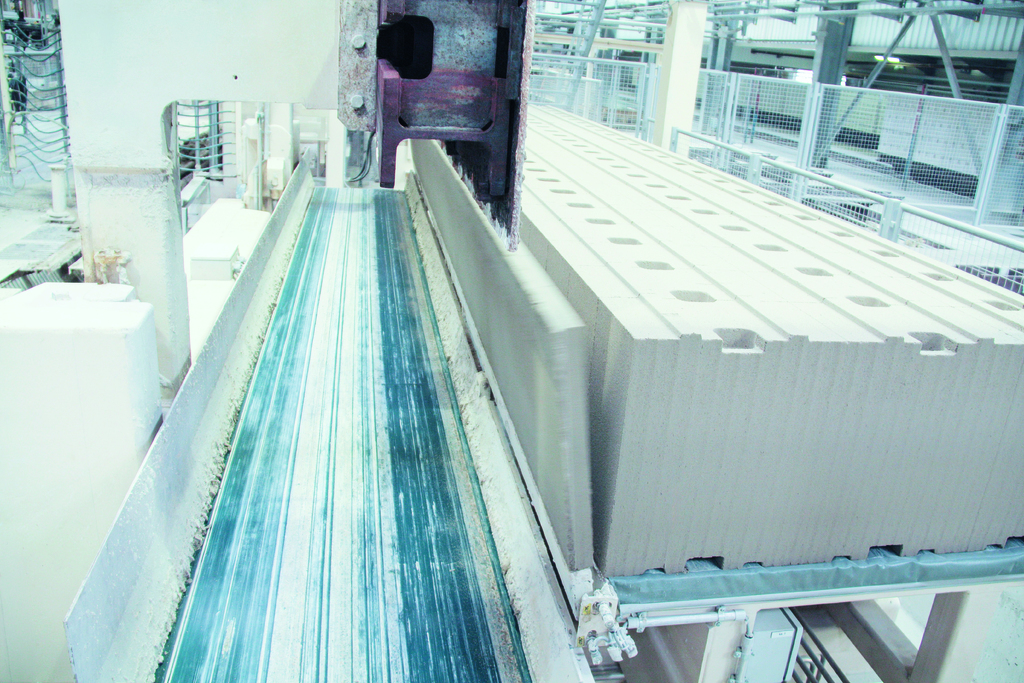
White separating after autoclaving
After autoclaving, the cake passes through the white separator. This machine opens the remaining thickness-cutting joints in the hardened cake, overcoming any bonds formed during the curing process.
The products are dimensionally stable at this stage, which is an advantage when handling thin or otherwise delicate products. Their suitability for white separating depends on the relationship between joint adhesion, product strength and the forces applied by the separator.
If adhesion is excessive or uneven, however, separation can cause edge damage, spalling or cracking. A suitable recipe, controlled autoclaving conditions and correctly adjusted separating equipment allow the process to achieve the required quality and plant capacity. All parameters of the separating machine are automatically set according to the AAC density and thickness. This facilitates gentle and efficient conditions for each product.
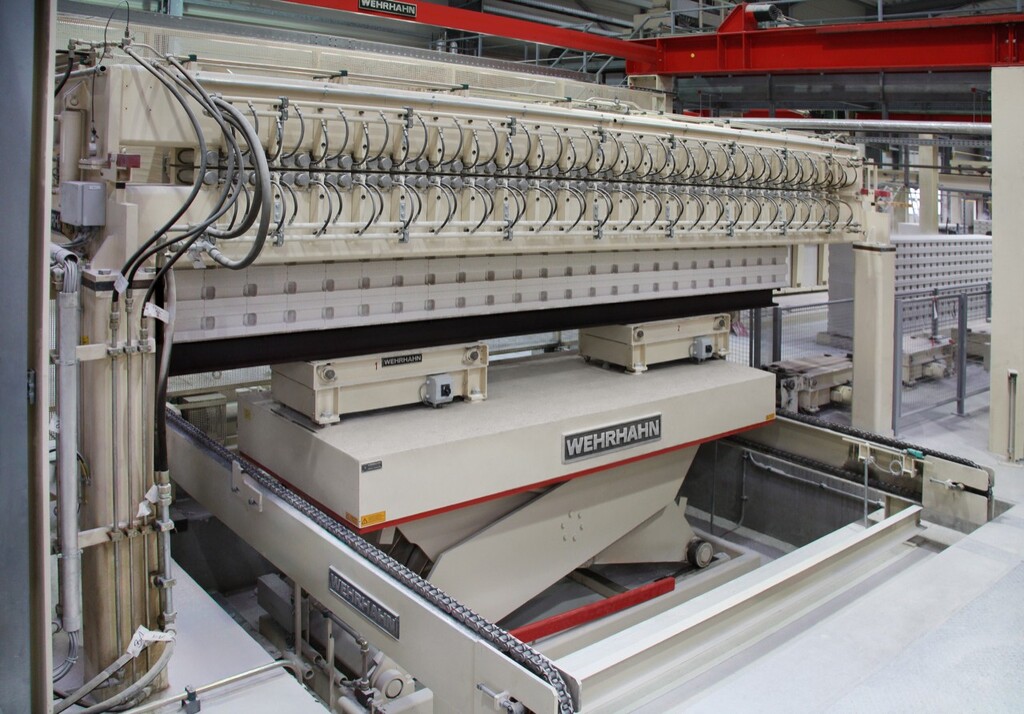
Smart flat cake autoclaving and green separating
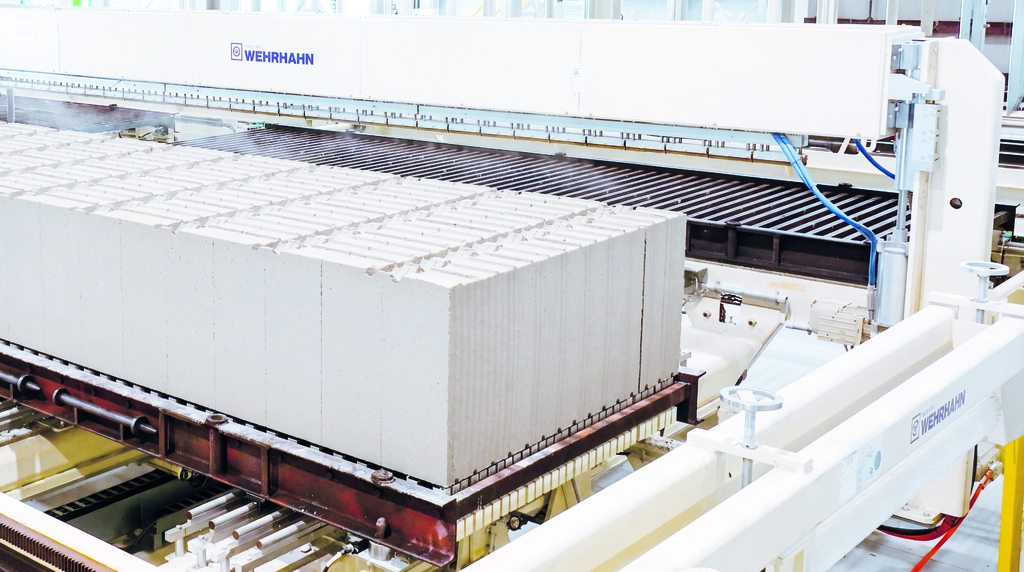
In Târgu Cărbunești, the cake is tilted back after cutting and placed flat on an autoclaving grid. The thickness-cutting joints are therefore vertical. The green separator supports the product rows on individual lamellas and separates them sequentially. A defined gap breaks any remaining cutting bridges and keeps the adjoining surfaces apart during autoclaving.
In this position, the product rows stand side by side. Their weight does not press the thickness-cutting joints together, and downward water migration no longer passes across a succession of loaded horizontal interfaces.
The separated cake is transferred to an autoclave trolley and cured in the flat position, with the gaps maintained between the rows. These joints require no subsequent white separating. The gaps between the rows allow easier steam penetration which can reduce autoclave cycle time thus enhancing energy efficiency of the plant.
Optional intermediate curing station
The optimum hardness of the cake for cutting can in some cases differ from that required for green separating. A softer cake offers less resistance to the cutting wires, but it may still be too weak to withstand contact with the lamellas and the movements in the green separator.
Insufficient green strength could possibly result in lamella marks or deformation. These issues need to be prevented through suitable cake conditioning and handling.
An optional intermediate curing station between the cutting line and the green separator gives the cake more time to develop strength. Cutting can then take place in a relatively soft condition, followed by green separating at a higher strength. [2, 3]
This separates the requirements of the two operations and widens the cutting window while helping to minimise lamella marks. It is especially useful where a recipe’s cutting and separating requirements cannot be met satisfactorily at the same cake hardness.
Cake dimensions and capacity
The different mould formats reflect these loading conditions. Plus uses a 6.0 × 1.2 m mould to limit the height of the upright cake. The Smart plant in Târgu Cărbunești uses a 6.0 × 1.5 m mould: the flat cake arrangement accommodates the larger format without stacking product rows across the thickness-cutting joints.
At the same casting height, the Smart mould holds 25% more cake volume per cycle. With equal cycle times, this supports correspondingly higher volumetric output, provided that the other plant sections are sized accordingly. Both separating systems meet the required production cycle time; the volume advantage comes from the larger mould format.
Soceram’s reasons for selecting Smart
From Wehrhahn’s perspective, production economics, scope for product development and reliable cutting and separating explain the suitability of Smart for Soceram’s second plant. Experience gained at Cordun provided the basis for evaluating the requirements of the new investment. Soceram’s own assessment, set out below, adds the customer’s priorities to this technical appraisal.
Production economics and future product requirements
The larger cake format was a key consideration. Processing a larger volume per cycle supports the capacity required at the new site. Its economic value depends on the investment and operating costs relative to the saleable output, including material yield, energy consumption and plant availability.
Soceram also considered the development of its product programme over the life of the plant. The selected configuration needed to manufacture established products efficiently while providing flexibility for future recipes and geometries. The decision therefore addressed both the immediate production requirement and longer-term development.
Cutting and separation as an integrated process
Preventing sticking at the thickness-cutting joints during autoclaving was an important part of this assessment. Green separating removes the need to break an autoclaved bond at these interfaces, supporting reliable production as recipes and product properties vary.
The corresponding requirement is to handle the green cake without causing any damage. Cutting resistance, green strength, lamella contact and machine movements must therefore be considered together. The redesigned thickness cutter contributes to this balance; intermediate curing would optionally be available where additional strength development is needed before separating.
From this engineering perspective, the combination of the larger format and an integrated cutting and separating process made Smart an appropriate choice for Soceram’s new investment.
Soceram’s priorities
In its written assessment, Soceram identifies the green separating machine as the single most important element in its decision. The customer also highlights the increased efficiency of the steam boiler plant and the replacement of hydraulic actuation with frequency-converter-controlled electric actuation on the loading machine, citing improved reliability and control.
The steam-related benefit reflects the improved steam penetration described above: the open joints maintained after green separating facilitate steam entry into the cake and can reduce the autoclaving cycle time, thereby improving the energy efficiency of the plant. These customer priorities complement the supplier’s assessment of the selected plant concept and its equipment.
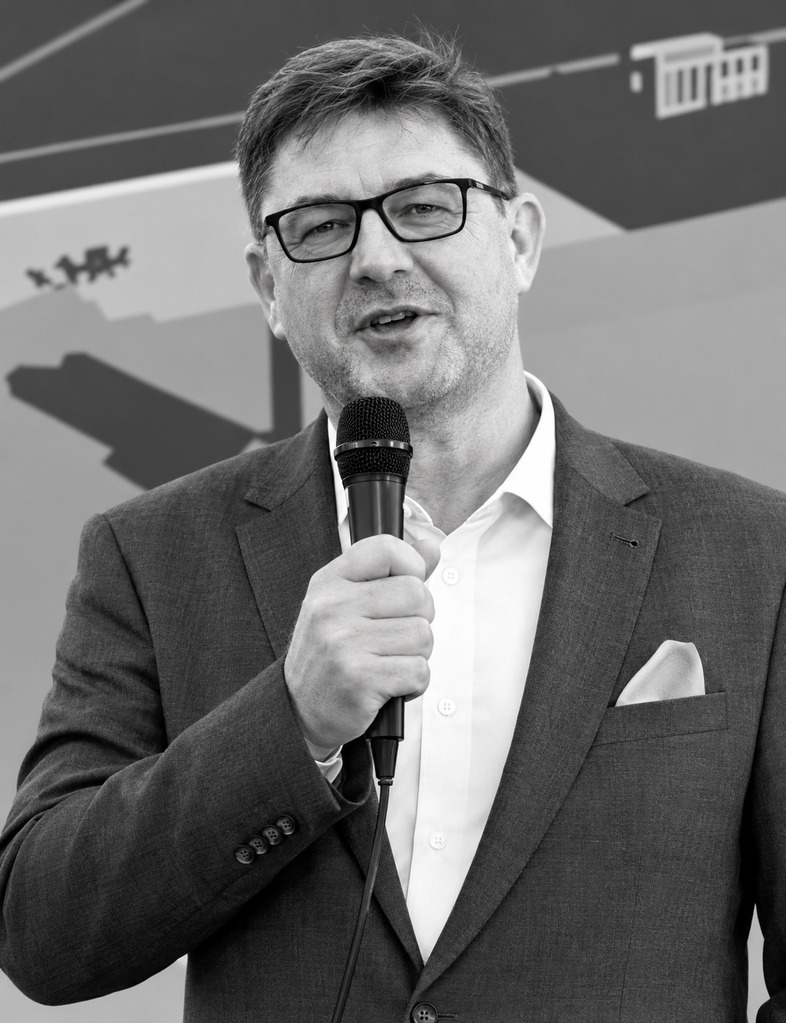
Constantin Spinu, Investment and Engineering Director, Cemrom, on the choice of Smart for Soceram’s second Wehrhahn plant:
“Looking back at our decision-making process for the second plant, three factors stood out as particularly important in choosing Smart over Plus:
1. The Green separating machine was the single most important element in our decision. Its performance made a strong case for Smart from the outset.
2. The increased efficiency of the steam boiler plant was another key advantage that favored Smart.
3. Replacing hydraulic actuation with electric actuation using frequency converters on the Loading Machine also proved to be a clear benefit, improving reliability and control. Together, these factors made Smart the more attractive option for our second plant.”
Partnership and progress in plant technology
A repeat order is a vote of confidence
Ordering a second Wehrhahn plant expresses Soceram’s satisfaction with the Cordun project and their confidence in the supplier. The experience of operating Plus provided the foundation for continuing the partnership. Close cooperation between the Soceram and Wehrhahn teams carried that relationship into the delivery and commissioning of the Smart plant.
The right technology for the application
The plant selection starts with the customer’s requirements and a careful evaluation of the advantages and limitations of each process. Raw materials, product dimensions and densities, planned output, available space and operating costs all influence the decision. Neither the Plus nor the Smart technology is universally better or worse: the most appropriate technology is the one best suited to the application.
Soceram’s two plants illustrate this principle. A successful Plus installation and a subsequent Smart investment are consistent choices for projects with different requirements.
Intelligent automation with MCS
The seven years between commissioning the two plants also encompass significant developments in automation. The current Smart generation incorporates capabilities beyond those of the original 2019 configuration.
The Wehrhahn Master Control Server (MCS) collects and evaluates production data from across the plant and supports the optimisation of machine operation. Its connected functions cover data acquisition, analysis and process optimisation. Dashboards display key performance indicators, including overall equipment effectiveness (OEE), giving operators and managers a common basis for evaluating production. [4]
The current MCS platform links raw material information, machine parameters and quality results to individual production units. This traceability helps identify the causes of quality variations and assess recipe or process changes. Web-based dashboards allow users to move from a plant overview to individual signals and adapt the information displayed to their responsibilities.
Condition monitoring of temperature and energy use supports predictive maintenance and helps teams plan interventions. Energy analysis identifies opportunities to improve resource efficiency, while AI-assisted analysis can support investigations into downtime and process performance. The available functions depend on the connected equipment, sensors and system configuration. Together, they provide a practical basis for continuous improvement as Soceram develops its production processes. [5]
Electromechanical drives
Alongside advances in automation, Wehrhahn has replaced hydraulic actuation wherever practicable with efficient electromechanical alternatives. This development is part of the ongoing improvement of the machinery and complements the capabilities of MCS.
On the Loading Machine, electric actuation using frequency converters replaces hydraulic actuation. The drives allow controlled adjustment of speed and acceleration to suit the handling sequence. Soceram specifically identifies the resulting improvements in reliability and control as a clear benefit of the new plant. Reducing the use of hydraulics also reduces the number of hydraulic components requiring inspection and maintenance.
Soceram’s continued investment with Wehrhahn combines the value of an established partnership with technology selected for the next stage of Soceram’s business development. The two plants demonstrate how application-specific engineering and ongoing advances in automation can support a customer’s development over many years.
Comparison at a glance
Feature | Plus Cordun | Smart Târgu Cărbunești |
Cutting orientation | Upright | Upright |
Project mould format | 6.0 × 1.2 m | 6.0 × 1.5 m |
Position after cutting | Upright for autoclaving | Tilted back to horizontal |
Thickness-joint orientation in autoclave | Horizontal under layer weight | Vertical and opened |
Separating stage | After autoclaving | Before autoclaving |
Separating equipment | White separator | Green separator |
Specific feature | Wehrhahn bed remover | Optional intermediate curing station |
References
[1] Wehrhahn, Different technologies for handling and cutting AAC cakes, AAC Worldwide (02/24)
[2] Wehrhahn AAC production plants
[3] Wehrhahn Journal 2019, cutting line and intermediate curing
[4] Wehrhahn Journal 2022, intelligent automation and separating technology
[5] Wehrhahn Journal 2026, MCS, pp. 1 and 4
(References [2-5] can be found at the Wehrhahn website)